IOW MICROCEMENT CO. · THE MATERIALS GUIDE
Which decorative finish is right for your space?
Choose your space and the appearance you love. Explore the collection, compare your favourites and talk through the possibilities with us.
SEAMLESS OR TEXTURED?
Start with the material.
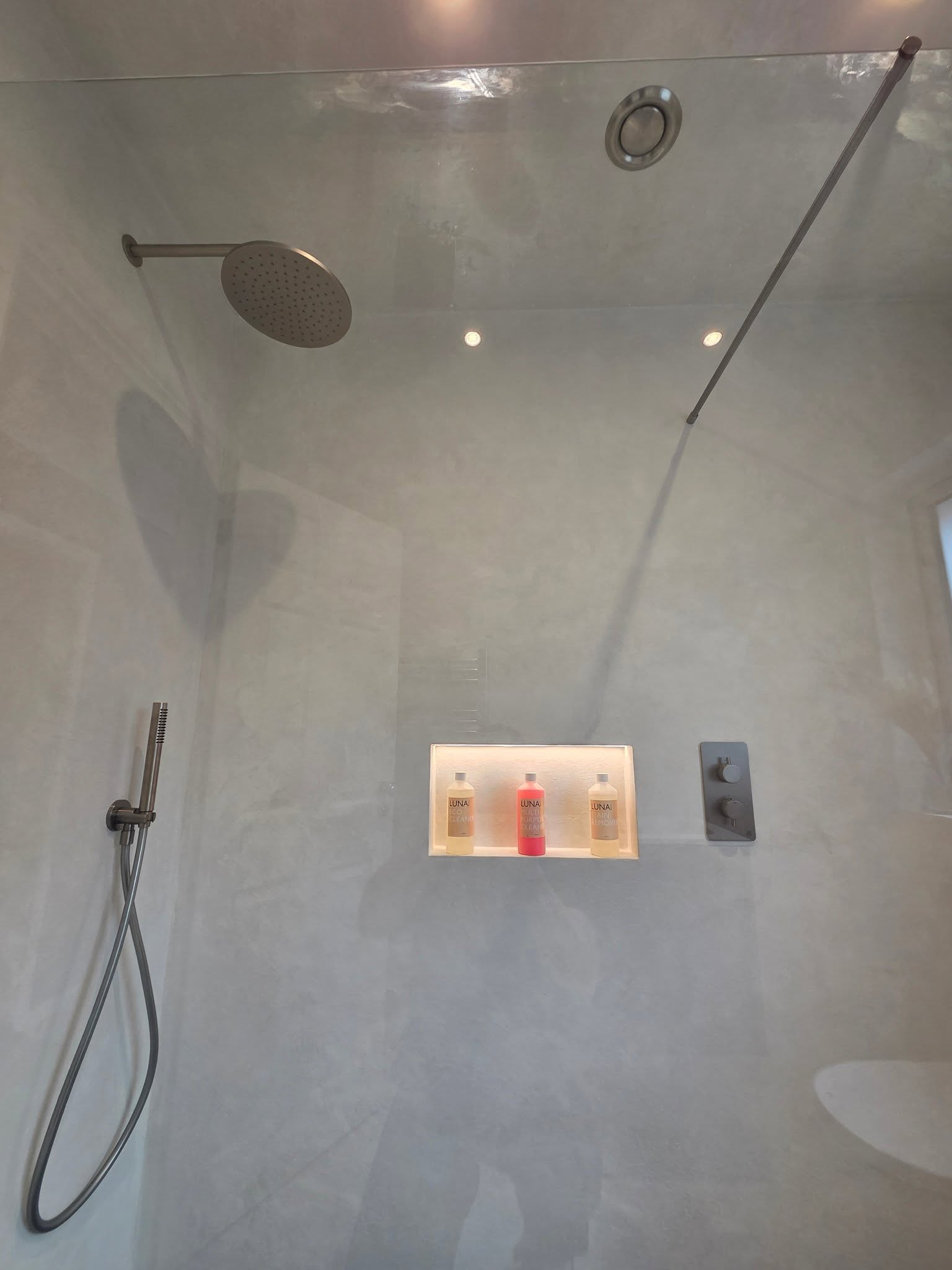
Our Hydro Plaster is waterproof throughout its applied layers, for the lifetime of the application. Bathrooms, showers and wet rooms still need a complete installation designed for the substrate, junctions, drainage and daily wear.
Explore Hydro’s waterproof layersDECORATIVE WALL FINISHES
A different kind of character.
Decorative plaster focuses on texture, colour and surface movement. Natural clay plaster belongs on dry interior walls and ceilings; it is not waterproof microcement. Stone and granite effects describe an appearance, not the performance of solid stone.
Explore the finishes collection01 / BEGIN WITH YOUR SPACE
Where will it be used?
Every surface starts with the right preparation and a suitable complete system.
Technical guide · worldwide materials & application suitability
BEYOND APPEARANCE
Understanding the material.
This guide compares common decorative coating types and effects, not a fixed promise that every option is available or suitable for every project. Wet areas, floors, worktops and exterior spaces require a site assessment and a manufacturer-approved system, with appropriate waterproofing and slip resistance where needed. This worldwide research is industry education, not our service list or a tested rating. Labels apply only to the application selected below; wet, exterior and worktop uses require specialist review.
One-component mineral microcement
Benefits & considerations
Why choose it? Natural mineral appearance; simpler mixing logistics; fine/medium/coarse options; thin overlay.
Things to consider: Typically dependent on the full specified sealer system for water and stain protection; cracks can reflect substrate movement; abrasion depends on grade.
Water: Generally protection-layer-dependent unless TDS states otherwise
Care: Use the manufacturer's care instructions. Most sealed systems use approved pH-neutral cleaning; avoid abrasives and remove spills promptly. Protective refreshes depend on the system and use.
Two-component polymer-cement microcement
Benefits & considerations
Why choose it? Versatile, good adhesion and trowelled aesthetics; many documented wall/floor applications.
Things to consider: Mixing/application sensitive; sealer and wet-area assembly critical; not immune to scratches or structural movement.
Water: Often gains service water resistance from specified sealer/topcoat
Care: Use the manufacturer's care instructions. Most sealed systems use approved pH-neutral cleaning; avoid abrasives and remove spills promptly. Protective refreshes depend on the system and use.
Ready-mixed acrylic / synthetic microcement
Benefits & considerations
Why choose it? Consistent supply and colour; convenient application; often good decorative uniformity.
Things to consider: Performance strongly product-specific; not all systems suit heavy traffic, water immersion or outdoor UV.
Water: Product- and sealer-dependent
Care: Use the manufacturer's care instructions. Most sealed systems use approved pH-neutral cleaning; avoid abrasives and remove spills promptly. Protective refreshes depend on the system and use.
Epoxy microcement / epoxy hybrid
Benefits & considerations
Why choose it? Often strong abrasion, chemical and moisture performance, suitable for demanding areas when approved.
Things to consider: Rigidity, UV/yellowing and repair behaviour depend on formulation; specialist preparation and professional installation.
Water: Some products waterproof through layers; verify entire specification
Care: Use the manufacturer's care instructions. Most sealed systems use approved pH-neutral cleaning; avoid abrasives and remove spills promptly. Protective refreshes depend on the system and use.
Polyurethane-mineral / resin-hybrid microcement
Benefits & considerations
Why choose it? Potential for high wear resistance and specialist water performance; natural decorative appearance.
Things to consider: Chemistry, UV stability, abrasion and outdoor tolerance cannot be assumed from the PU label alone; installer/specification matters.
Water: Some systems claim waterproof throughout their layers; seek product evidence
Care: Use the manufacturer's care instructions. Most sealed systems use approved pH-neutral cleaning; avoid abrasives and remove spills promptly. Protective refreshes depend on the system and use.
Flexible / movement-tolerant microcement
Benefits & considerations
Why choose it? Better option where modest substrate movement is expected, subject to tested limits.
Things to consider: Not a cure for unstable buildings, defective substrates or ignored expansion joints; wear may trade off against flexibility.
Water: Some manufacturer-specific systems are waterproof through body
Care: Use the manufacturer's care instructions. Most sealed systems use approved pH-neutral cleaning; avoid abrasives and remove spills promptly. Protective refreshes depend on the system and use.
Dedicated pool / immersion-grade system
Benefits & considerations
Why choose it? Addresses permanent water exposure, chemical dosing and potentially vapour/blistering issues.
Things to consider: Narrow product selection; technical design, waterproof substrate, curing, chemical balance and warranty rules matter.
Water: Immersion suitability must be declared for exact system
Care: Use the manufacturer's care instructions. Most sealed systems use approved pH-neutral cleaning; avoid abrasives and remove spills promptly. Protective refreshes depend on the system and use.
Lime-based decorative micromortar / tadelakt-style
Benefits & considerations
Why choose it? Soft, handcrafted, gently mottled, traditionally inspired aesthetics.
Things to consider: Different cleaning, moisture and abrasion behaviour; many finishes are for walls, not floors or submerged areas.
Water: Depends on formulation, finish and wet-area detail
Care: Use the manufacturer's care instructions. Most sealed systems use approved pH-neutral cleaning; avoid abrasives and remove spills promptly. Protective refreshes depend on the system and use.
Earth / clay plaster (adjacent finish)
Benefits & considerations
Why choose it? Warm, matt, tactile appearance; hygroscopic behaviour and low-gloss natural style.
Things to consider: Soft and lower abrasion resistance; water exposure and cleaning constraints; not a trafficable finish.
Water: Not a waterproof finish
Care: Keep dry and follow the clay manufacturer's cleaning advice. Clay is softer than sealed microcement; do not assume wet wiping or abrasive cleaning is appropriate.
Stone / microterrazzo / granite-look decorative system
Benefits & considerations
Why choose it? Expressive natural stone or terrazzo appearance; flecked textures hide some visual marks.
Things to consider: High variation in thickness, polishing, slip, surface porosity and suitability; must be matched to a named product.
Water: Verify the chosen complete system
Care: Use the manufacturer's care instructions. Most sealed systems use approved pH-neutral cleaning; avoid abrasives and remove spills promptly. Protective refreshes depend on the system and use.
Worldwide textures, effects & sheen
Refined / fino / smooth
Very fine grain, almost plaster-like; elegant, understated.
Advantages: Easy-wipe feel, minimal visible grain, refined for high-end interiors.
Considerations: May show scratches, trowel marks and standing-water slip risk more readily; a smooth visual finish is not proof of cleanability.
Feature walls, approved low-use floors and vertical wet areas.
Check wet-floor slip data on the actual sealed finish.
Natural / medium grain
Fine-to-medium stone-like grain; soft variation.
Advantages: Good balance of movement, tactile quality and practicality.
Considerations: Grain is not a measured slip rating; cleaning depends on final sealer/texture.
Walls and appropriate medium-use floors.
Do not infer identical performance across brands using the word natural.
Rustic / coarse mineral
Pronounced aggregate and natural stone character.
Advantages: Expressive texture; can help disguise some minor day-to-day marks; suitable candidate for textured external visuals.
Considerations: Can retain dirt if left rough and may feel abrasive barefoot; coarse grain can also be diamond-sanded smooth.
Feature walls and manufacturer-approved hard-wearing floors.
Specify final surface texture separately from grain size.
Cloud / softly mottled
Subtle gradients, cloudy movement and hand-trowelled tonal variation.
Advantages: Organic luxury feel; visually forgiving of natural tonal variation.
Considerations: Results are handcrafted and cannot exactly match a swatch or photograph.
Living rooms, feature walls, boutique interiors.
Agree a site sample and acceptable variation.
Organic / natural movement
Layered, asymmetric trowel transitions and movement.
Advantages: Warm, artisanal and bespoke appearance.
Considerations: Less uniformity; skill-dependent; some clients may expect a smoother result.
High-end statement interiors and surfaces with character.
Sample approval and lighting review are important.
Raw / industrial concrete effect
Visible movement, trowel marks and concrete-like imperfections.
Advantages: Architectural and contemporary; suits large uninterrupted walls.
Considerations: Apparent unevenness/colour variation is integral, not a production defect; strong lighting accentuates marks.
Industrial interiors, kitchens, lofts and commercial design.
Explain variation in advance.
Stucco / highly variegated
Higher contrast, cloudy, marbled or burnished trowel effects.
Advantages: Striking bespoke finish with depth and movement.
Considerations: Difficult to reproduce identically in repairs or extensions.
Feature walls and statement furniture.
Not the same as gloss or waterproofness.
Stone, granite or terrazzo effect
Visible mineral flecks, particles or stone-inspired pattern.
Advantages: Distinctive premium design; strong material storytelling.
Considerations: Product family may have different maintenance/weight/slip requirements.
Statement walls, approved floors and joinery.
Treat as its own quoted material system where necessary.
Metallic / patina / rust effect
Reflective pigment, metal-like sheen or oxidised visual effect.
Advantages: Dramatic feature aesthetic.
Considerations: Many systems are decorative metal paint/coatings rather than conventional cement; suitability often limited to walls; finish more sensitive to marks.
Accent walls, commercial features.
Do not offer as a default shower-floor option.
Matt / super-matt sealer
Low reflection, calm natural appearance.
Advantages: Soft architectural effect; conceals reflections.
Considerations: Low sheen does not certify slip resistance; dark matt surfaces can show marks.
Most elegant walls, many approved interior floors.
Specify cleanability and tested slip separately.
Satin sealer
Gentle reflected light; between matt and gloss.
Advantages: Subtle colour lift and wipeable practical feel with suitable product.
Considerations: Sheen alone gives no slip or chemical resistance guarantee.
Balanced interiors, approved floors and worktops.
Sealer chemistry and test data govern performance.
Polished / diamond-polished / gloss
Smoother, brighter, more reflective mineral surface.
Advantages: Luxury polished-stone aesthetic; can intensify colour.
Considerations: Can expose scuffs and cause slip concerns on wet floors; maintenance may be more visible.
Statement vertical surfaces and dry decorative settings.
Never assume appropriate on barefoot shower floors.
Textured / anti-slip specified finish
Light surface profile or compatible aggregate/additive; appearance varies.
Advantages: Allows selection around the required wet-use slip performance.
Considerations: Can be harder to wipe and less smooth barefoot; must be tested as installed and maintained.
Shower floors, exterior walkways, stairs and wet commercial areas when tested.
Request wet PTV with the correct rubber slider/conditions; a label alone is insufficient.
Popular choice does not mean approved for your project. Written manufacturer evidence and installation details always take precedence.
SYSTEM-SPECIFIC · NOT A GENERIC RATING
Hydro, in context.
Hydro Plaster is waterproof throughout its applied layers, for the lifetime of the application. This is a named-system characteristic, not a property attributed to every material family in the worldwide matrix. Waterproof material still needs a complete installation designed for the chosen application.
The specification and sealer matter: some build-ups are decorative only, and not every sealer suits wet areas. Manufacturer instructions and a project assessment take precedence over the general matrix.
BESPOKE DECORATIVE DIRECTIONS
More than a product name.
Rock Plaster offers decorative additives, texture and varied sheen as separate design choices. Earth is natural clay for appropriate dry interiors, not waterproof microcement. Stone and granite describe decorative possibilities, not an automatic approval for a worktop or floor.
Explore Our Decorative FinishesMore questions about materials & care
Is microcement waterproof?
Some specialist systems are waterproof throughout their specified layers. Other traditional microcements rely on their sealer for surface water resistance. Showers need a properly designed waterproof installation, not just a decorative finish.
Can microcement go over existing tiles?
Often, where tiles are sound and well bonded. Preparation may include cleaning, smoothing grout joints, a compatible primer and reinforcement. Damaged or moving tiles must be resolved first.
Does it crack?
A well-installed finish can be durable, but cracking may appear if the substrate moves or preparation is inadequate. Some systems are more movement-tolerant than others.
What is the best finish for a shower floor?
A wet-room-approved system with a measured, suitable wet barefoot slip-resistant finish. Looks alone cannot tell you how safe it will be.
Is microcement the same as polished concrete?
No. Microcement is normally a thin hand-applied overlay, while polished concrete generally involves finishing an actual concrete slab or substantial topping.
Will every area look exactly like the sample?
No. Hand-applied coatings have natural variations in tone, trowel movement and texture. We recommend approving a representative sample before work begins.
Can I have it outdoors?
Some products are designed for exterior use, but UV, weather, drainage, temperature and coastal exposure need checking. Not every manufacturer approves outdoor application.
Can it be used on a kitchen worktop?
Some specified systems can. Worktops need an appropriate resistant finish and clear guidance about heat, acidic spills, knives and food contact.
What is the difference between matt, satin and polished?
They mainly describe how much light the finished surface reflects. They do not by themselves establish durability, waterproofing or slip performance.
How do I look after microcement?
Most sealed systems are maintained with appropriate pH-neutral cleaning and prompt spill removal. Avoid abrasives and follow the actual manufacturer's care instructions; some systems need periodic protective refreshes.
What is the difference between smooth and textured finishes?
Fine grain gives a refined appearance; coarser grain adds mineral character. Rough surfaces can retain dirt, while smooth finishes can show marks. Grain can be sanded smooth, so appearance is not a tested slip rating.
Which systems are suitable for commercial spaces?
An appropriate traffic-rated system may be considered. Ask for wear and wet-slip evidence for the exact finish, especially at entrances, and assess cleaning, substrate movement and the intended use.
How do I choose the right finish?
Start with the space, water exposure, daily wear and appearance you love. Review a representative sample, then confirm the full manufacturer-approved system and care requirements with your installer.